
Challenge
Marine fuels are evolving, and so are their challenges. With the introduction of diverse feedstocks since 2020, the chemistry of marine fuels has become more complex than ever. Variability, contamination, and instability now pose significant operational risks for shipowners and operators worldwide.
While ISO 8217 defines the basic standards for marine fuel quality, field experience has shown that compliant fuels can still cause serious issues, ranging from sludging and filter clogging to pump seizures and even blackouts.
A recent case illustrates this gap: a vessel reported progressive operational issues shortly after bunkering a fuel that met all ISO 8217 requirements. Despite full compliance on routine analysis, the vessel experienced:
- Falling fuel pressure at the engine inlet
- Inability to maintain required RPM and speed
- Noticeable loss of engine power
Standard fuel testing confirmed all parameters were within ISO limits. No immediate red flags were identified through conventional analysis. The fuel had phenols, reactive compounds, and organic acids, which led to significant corrosion of the fuel pumps and purifier sludging.
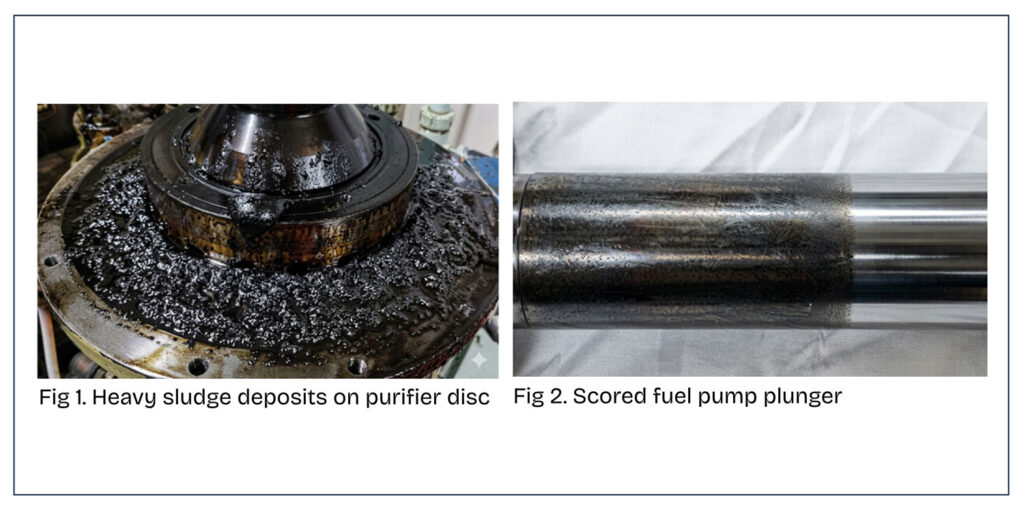
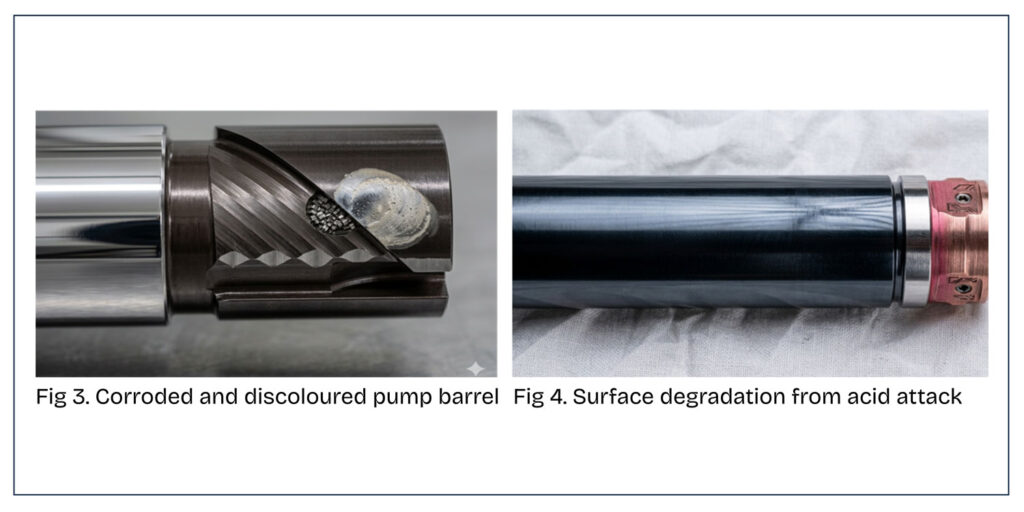
These conditions highlight a growing industry need: testing that goes beyond compliance to uncover the hidden chemistry behind fuel-related failures.
Solution
Viswa has pioneered the use of Gas Chromatography–Mass Spectrometry (GCMS) to bring unseen chemistry to light, transforming laboratory data into actionable insights for proactive fuel quality management.
GCMS detects chemical “fingerprints” that routine tests often miss, providing a deeper look into the root causes of fuel instability and equipment damage. By combining GCMS findings with port history, fuel source, and vessel feedback, Viswa turns complex chemical data into practical intelligence that helps operators make informed and proactive decisions.
Viswa offers three tiers of GCMS testing, each designed for different levels of diagnostic depth:
01 GCMS Screening
A rapid, cost-effective test to identify the presence of organic chlorides, phenolics, reactive species, alcohols, and oxygenated compounds.
02 GCMS Comprehensive Analysis (CRA)
A deep-dive analysis evaluating halogenated, oxygenated, phenolic, reactive, alcohol, nitrogen compounds, and FAMEs. This provides detailed chemical profiles for diagnostic and predictive assessment.
03 GCMS Acid Analysis
Assessment of free fatty acids, which are often corrosive and linked to metal wear, deposit formation, and fuel instability. Viswa’s specialized derivatization process ensures accurate detection, even for complex polar compounds.
Approach Taken
To understand the discrepancy between compliance and performance in the case above, a deeper investigation was initiated:
- Resampling of fuel directly from onboard storage and service tanks
- Comparative analysis against original bunker samples
- Advanced compositional profiling using GCMS
GCMS revealed the presence of phenols, reactive compounds, and organic acids, none of which would have been flagged by standard ISO testing. These compounds were directly linked to the corrosion of fuel pumps and purifier sludging experienced on board.
This investigative methodology, combining resampling, comparative benchmarking, and advanced spectral analysis, exemplifies how Viswa bridges the gap between paper compliance and real-world performance.
Sector Impact
Over the years, Viswa’s GCMS investigations have revealed distinct contamination trends across key bunkering regions. Each of the fuels below met ISO specifications, yet GCMS uncovered the hidden chemistry behind significant operational problems:
| Region & Year | Operational Issue | Key Compounds Identified |
| Singapore (2022) | Fuel pump seizure, corrosion, filter choking | Organic chlorides |
| ARA Region (2023–2024) | Fuel pump seizure & purifier sludging | Phenolic & oxygenated compounds / Cashew nut shell liquid |
| US Gulf Coast (2023–2024) | Sludging, corrosion | 2-Ethylhexanol, tetrachloroethylene, FAME, free fatty acids |
| Turkey (2025) | Excessive wear of Fuel Pump Plunger/ Barrel | Phenolic & oxygenated compounds |
| New Orleans (2025) | Erosion-corrosion/cavitation on ME and/or AE fuel pump plungers | Oxygenated compounds & fatty acids |
As the maritime industry transitions toward bio-based and alternative fuels, in-depth analysis is no longer optional; it is essential. These regional patterns demonstrate that fuel quality risk is systemic, and conventional testing alone is insufficient to protect vessel operations.
Viswa Differentiators
- Pioneered GCMS application for marine fuel diagnostics, building an evolving database with every test, vessel feedback, and incident analysed
- Offers a tiered testing framework (Screening, CRA, Acid Analysis) tailored to different risk profiles and budgets
- Combines chemical data with port history, fuel source intelligence, and vessel feedback to deliver actionable, not just analytical, insights
- Continuously enhances predictive capability to detect and prevent future contamination events before they affect operations
GCMS is more than a test. It is a safeguard: a window into the unseen chemistry of your fuel.
And with expert interpretation, it becomes a cornerstone of reliable, data-driven fuel quality management.